
Read about our drive along the west coast of Sardinia from the bustling capital Cagliari to the coastal resort of Alghero taking in the candle festival of Sassari. Located on the southern coast of Sardinia, Cagliari has throughout history been a leading trading seaport in heart of the Mediterranean.
The oldest part of this bustling capital is the Castello, perched like a crown on top of the hill in the town centre. Park the car outside the city walls and enter the city via the Porta Christina. Immediately to your left you find the former Arsenal, now housing the city’s most important museums; those of Archaeology, Oriental Art and the Municipal Art Gallery.
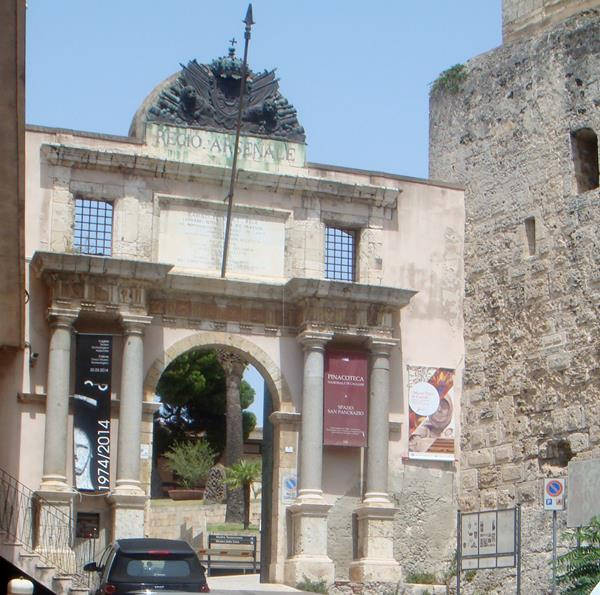
Visiting Cagliari
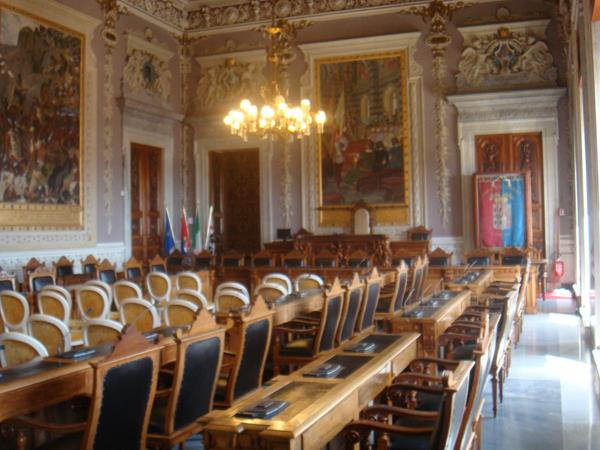
The grid-like layout of the city makes it easy to find your way around. Take a stroll along the Via Martini and you will soon be standing outside the Town Hall. Inside is the helpful tourist office and on the first floor are the Sala Della Rappresentanza and Sala del Consiglio Comunale.
On their walls hang numerous paintings of important events in Sardinian history. They tell of the relationship of Sardinia with mainland Italy, but what struck me most was the openness of the place, with no security checks or guards anywhere!
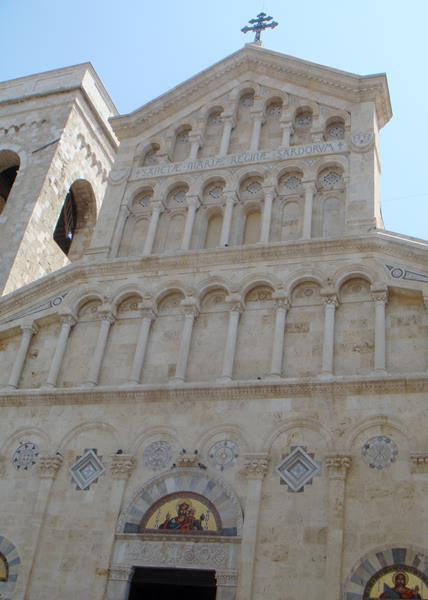
The Cathedral on Piazza Palazzo
The same street leads you down to the impressive Romanesque façade of the Cathedral on Piazza Palazzo, built by the Pisans in the 12th century. Dedicated to Santa Maria, this place of worship is extensively decorated in different types of marble in the Baroque style.
On Sunday the cathedral is packed, so many locals and visitors chose to sit on the steps outside to listen to the ceremony and music in the glorious sunshine.
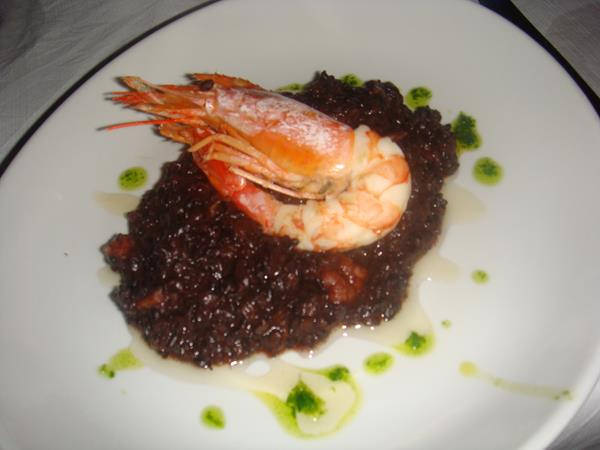
Lovers of antiques should plan to be in Cagliari on the second Sunday of the month, to indulge yourself at the antique market on Piazza Carlo Alberto. Be aware, however that the market is not open in August – oh well, time for lunch instead. I found this lovely trattoria serving wonderful seafood in one of the many narrow alleyways within the Castello.
The coast road to Oristano
From Cagliari we took the motorway towards Oristano. From there on, the coastal road is one I will always remember, simply breathtakingly beautiful. Sandy beaches or rocky outlets are embraced by the clearest waters I have seen for a long time.
The clouds ranged from dark ink and celestial blues to a soft shimmering turquoise. As cliffs get higher and the roads getting narrower, to my great surprise, long legged pink flamingos can be seen around the salt plains that are now vast nature reserves.
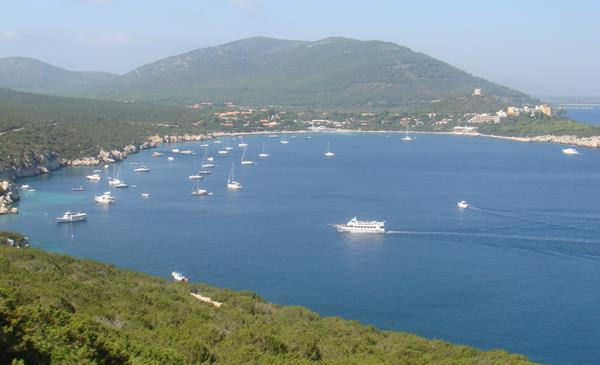
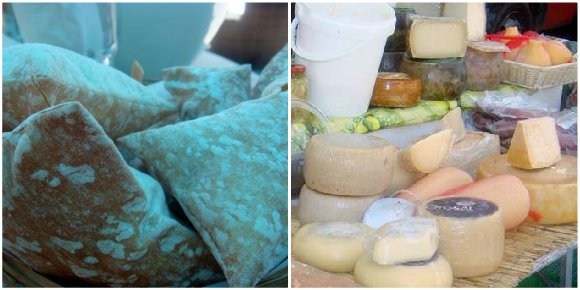
Continuing north, we made a stop at the pretty little town of Bosa on the river Temo. Here is a good market on a Wednesday morning selling fruit, cheese bread, a very good place for sampling delicious local produce.
Get here early as the market, and everything else for that matter, closes at lunchtime. Boat trips are available on the river in the evenings and along the river you see the old tannery buildings from the turn of the last century.
Arriving at Alghero
Closer to Alghero, the landscape changes again, becoming more fertile with many wine producing fields, including Sardinia’s favourite grape, the Vernaccia. Alghero has been a popular resort since the 1960s thanks to its long sandy beach.
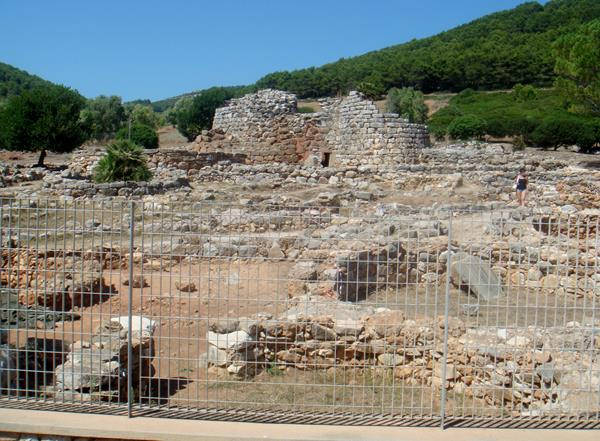
In the countryside south of Alghero you find signs of the Nuraghi people, who lived on this island in the 10th-12th century BC.
Via Garibladi runs along the seafront and marina and its many bars and restaurants are filled with trendy people watchers. As always, I head for the oldest parts of town.
I notice that this place has a very Spanish influence. Street names can be both in Italian and Catalan, going back to a time when the city was captured by the Aragonese.
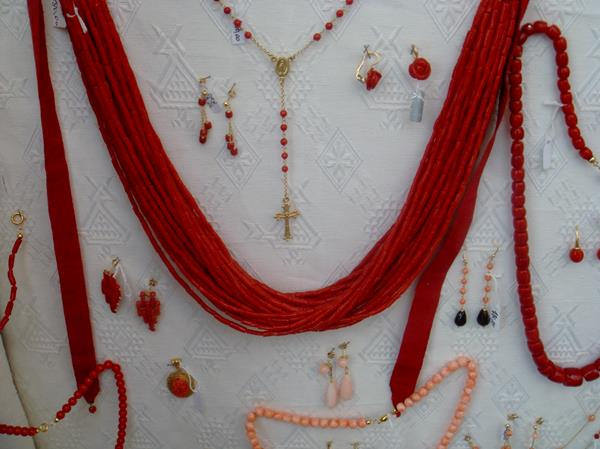
The San Francesco cloister from the 14th century is a reminder of this era and during summer months it becomes an atmospheric open air concert venue. In Via Calberto, you find many craftsmen selling local coral jewellery, much admired for its deep red colour.
Birdwatching on the Capo Caccia peninsula
As picturesque as Alghero is, particularly in the evening, it is the scenery outside the town that attracts me most. Do not miss the Capo Caccia peninsula, which appears like a huge sculpture before you, as you travel north of the city.
In the air you might be lucky to see one of the few surviving Sardinian Griffon vultures or the more common peregrine falcons, who have masses of white cliffs to choose from as nesting grounds.
But keep your eyes on the ground, particularly if you decide to take the 654 steps down the Escala Cabriol, (the goat’s steps) to Neptune’s Cave filled with remarkable stalactites and stalagmites.
The only let-down is that you have to take all the steps back up again! It is easy to get out to Capo Caccia on a hop on – hop off sightseeing bus. The trip takes 2 hours and is the best value ever had for 18 Euros.
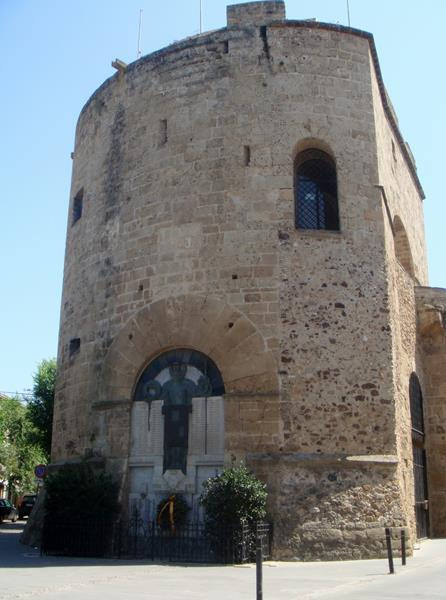
Sassari and the Giant Candles
Sassari is the second most important city in Sardinia. Municipal buildings in the Neo Classical style surround the large Piazza Italia. In its centre is a huge statue of Victor Emanuel ll (Vittorio Emanuele Maria Alberto Eugenio Ferdinando Tommaso).
He was the first king of a united Italy, but also gives his name to the long main shopping street, Corso Vittorio Emanuel. This street winds its way through the old town.
My main reason for visiting Sassari though, was the annual festival of the Candelieri. This is an incredible day to be there. From around lunchtime you can hear music and singing in the street. It gets louder by the hour, as the Candelieri start practicing for the evening.
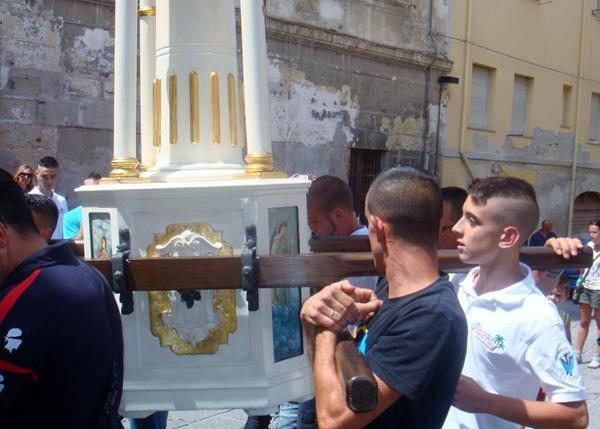
The event has its roots in the thirteenth century when the city was under Pisan domination. It was a tradition to offer a candle to the Madonna on the eve of the Assumption.
In the seventeenth century and after numerous plagues had hit the town. Then it took the form of religious thanks from the town guilds.
To this day nine guilds including blacksmiths, farmworkers, carpenters, tailors, greengrocers etc. parade through the city. Each carries a huge wooden column with coloured ribbons on top, representing a candle stick.
It takes 8-10 men to carry this 100 kilo candle, at the same time walking, singing and dancing in a procession through the city. Everybody joins in with this fantastic celebration. It ends in the evening when wooden candles are ceremoniously placed at the church of Santa Maria.

More Sardinia articles to enjoy
- Sea Caves and a boat trip
- A prehistoric village with a sea view
- How to eat well in Sardinia
- Window shopping for coral in Sardinia
- The Murals at Orgosolo in Sardinia
- 6 cool things to see in Nuoro Sardinia
- Old men just hanging around in Sardinia
- Behind closed doors in Sardinia
About the author: My thanks for this guest post to Astrid Ruffhead.
This article is originally published at Heatheronhertravels.com
Never miss an update! – Subscribe to receive our latest articles and newsletter


Claudia
Saturday 4th of July 2015
Thank you so much for this post. I don't know many bloggers who actually visit Sardinia, so you can imagine how happy I can be in finding out you have been here!
Heather Cowper
Friday 10th of July 2015
@Claudia On my visit to Sardinia, we enjoyed visiting the villages and swimming places inland away from the crowded coast
tom
Sunday 23rd of November 2014
Great
Kathy @SardinianPlaces
Monday 17th of November 2014
So many lovely places along this route. I particularly love Bosa with it's brightly painted houses, so different from anywhere else in Sardinia.
Heather Cowper
Monday 17th of November 2014
@Kathy so many visitors stay on the beach but there is so much more to see if you explore a little
Lauren Meshkin @BonVoyageLauren
Sunday 9th of November 2014
Ooooo, take me there! Lovely guest post, thanks for sharing.
Happy travels :)
Heather Cowper
Sunday 9th of November 2014
@Lauren At this time a year I'm dreaming about a coastal drive in the sunshine with views of the sea